
Aquaculture - The Next Engineering Frontier
Applying decades of proven engineering excellence from onshore and offshore energy, to the next generation of aquaculture — from land-based RAS to exposed offshore systems.
Engineering the Next Generation of Aquaculture Infrastructure
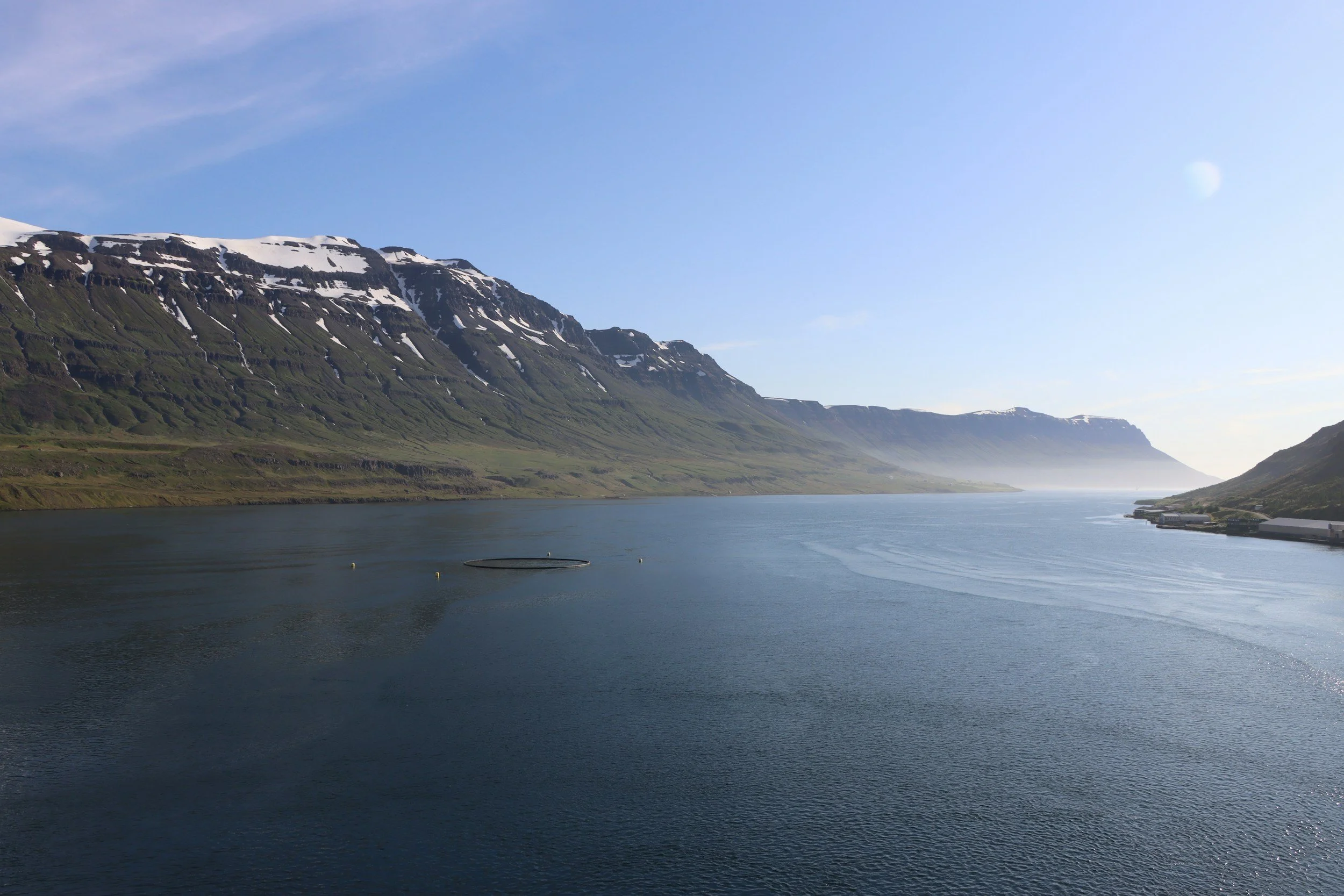
Aquaculture is transitioning from sheltered coastal farming to industrial-scale systems in increasingly complex environments.
Development is progressing across three parallel tracks:
Land-based RAS facilities
Offshore aquaculture in exposed waters
Co-location with marine energy infrastructure and offshore wind
As exposure, scale and capital intensity increase, the technical requirements move closer to offshore oil & gas and renewable energy projects.
Reinertsen New Energy applies offshore-proven engineering methodologies, analysis tools and execution models to deliver robust, scalable and low-carbon aquaculture infrastructure.

Land-Based Farming (RAS)
1
Modern RAS facilities require advanced industrial process engineering and infrastructure integration.
We support:
Hydraulic modelling and flow optimization
Pump sizing and redundancy analysis
Heat recovery and thermal management studies
Oxygenation and degassing system integration
Sludge handling and waste management systems
Energy balance and lifecycle efficiency calculations
Mechanical and piping layout design
Electrical load definition and backup power strategy
Our approach emphasizes operational robustness, energy efficiency and maintainability.
Offshore Aquaculture
2
Offshore aquaculture introduces environmental loads comparable to offshore energy installations.
We perform:
Global and local structural analysis (ULS, ALS, FLS)
Hydrodynamic response modelling (wave-current interaction)
Mooring configuration design and optimization
Fatigue life assessment of critical components
Dynamic riser and flexible connection analysis
Anchor capacity and seabed interaction studies
Installation and hook-up methodology development
Accidental load case assessment
Design is executed using offshore engineering principles developed and validated on the Norwegian Continental Shelf.
Co-Location with Offshore Energy
3
Co-location projects combine aquaculture systems with offshore wind or marine energy infrastructure.
These developments require:
Integrated structural and power system design
Offshore power export and distribution studies
Hybrid microgrid configuration (battery + renewable integration)
Subsea cable routing and protection studies
Interface management across multiple asset owners
Redundancy and reliability class definition
Reinertsen New Energy provides multidisciplinary system integration capability across structural, mechanical, electrical and control disciplines.
Our Approach
Reinertsen New Energy bridges decades of proven engineering excellence to meet the technical demands of modern aquaculture.
Offshore & Subsea Engineering
We apply competencies developed for offshore energy projects, including:
Structural design in accordance with Eurocode and offshore standards
Metocean data assessment and environmental load definition
Design basis development and reliability classification
Mooring and station-keeping analysis
Subsea system design and integration
Installation engineering and offshore constructability reviews
Design and analysis are performed in accordance with relevant standards such as:
DNV offshore standards
ISO marine and mechanical system standards
NORSOK where applicable
Process & Infrastructure Engineering
We combine offshore methodologies with industrial engineering expertise:
Piping system design and stress assessment
Mechanical equipment specification
Water treatment and filtration system integration
Electrical power distribution and load analysis
SCADA and automation interface definition
Multidisciplinary 3D coordination and layout optimization
This enables us to act as a technical integrator from early concept development through detailed engineering and operational handover.
Execution Capability
We provide full lifecycle engineering support:
Concept studies and feasibility analysis
Front-End Engineering Design (FEED)
Detailed engineering
EPC support and owner’s engineering
Interface and contractor coordination
Technical documentation and verification
Our execution model includes:
HAZID / HAZOP facilitation
RAM analysis (Reliability, Availability, Maintainability)
Risk-based design optimization
Failure mode assessment
Operational envelope definition
We combine agility with offshore-grade execution discipline and senior engineering capacity.
Enabling Offshore & Low-Carbon Operations
Energy supply and efficiency become critical design drivers as aquaculture expands offshore.
Reinertsen New Energy supports:
Shore-to-farm power transmission studies
Offshore electrification strategies
Hybrid microgrid design
Battery integration and load balancing
Emission reduction modelling
Techno-economic comparison of diesel versus hybrid solutions
Lifecycle cost optimization
Our renewable and low-carbon background enables aquaculture operators to reduce emissions while improving operational stability and long-term competitiveness.
When conventional aquaculture engineering reaches its limits, offshore energy expertise becomes the enabler.
Contact us